

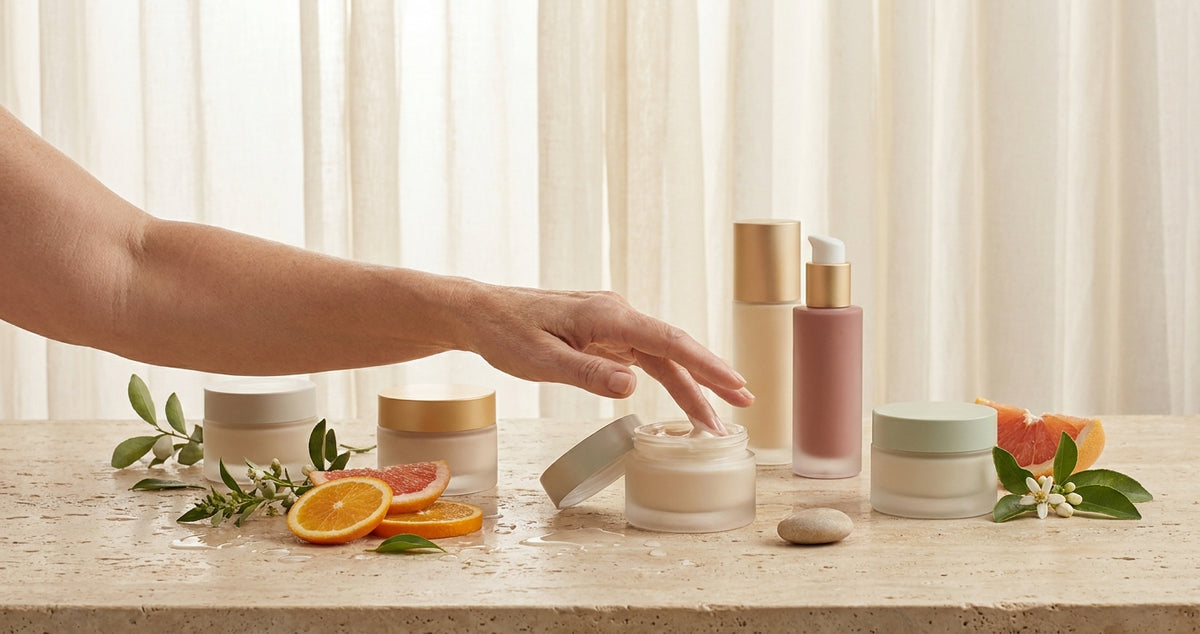
Have your arms or legs ever felt rough to the touch even after moisturizing—especially when light catches those fine, crisscrossing lines? That “crepey” look can be frustrating, but it does not mean your skin needs an aggressive treatment. The right fruit acid, used thoughtfully, may help smooth the surface and make body skin feel softer and more even.
Alpha hydroxy acids, or AHAs, are naturally occurring acids used in skincare to loosen the bonds between dead surface cells. They can improve roughness and scaling, but they cannot replace lost dermal volume or substantially tighten lax skin. In other words, an AHA for crepey skin can refine texture—not erase the natural changes that come with aging.
What AHAs Can—and Cannot—Do for Crepey Skin
The outermost layer of skin can accumulate dry, compacted cells, making arms and legs look dull, flaky, or uneven. AHAs help release some of the bonds holding those cells together, allowing them to shed more smoothly. The FDA notes that an AHA’s effects depend on its type, concentration, pH, and overall formulation.
That distinction matters. Research on AHAs is stronger for facial photoaging, keratosis pilaris, and surface roughness than for genuinely lax or “crepey” body skin. A body lotion may leave your arms looking brighter and feeling smoother, while changes in firmness are likely to be more modest.
Think of AHAs as texture editors, not instant tightening treatments.
For a complete approach, pair exfoliation with daily moisturization, gentle cleansing, sun protection, and patience. As discussed in Why Skincare Takes 6 Weeks: Skin Renewal Explained, visible skin changes often require consistent use over time.
Glycolic vs. Lactic Acid for the Body
Glycolic and lactic acid are the most common AHAs in body care, but they are not interchangeable.
- Glycolic acid has a smaller molecular size and generally penetrates more readily. That can create more noticeable exfoliation, but it may also mean more tingling or irritation, particularly on dry or sensitive skin.
- Lactic acid is often a comfortable starting point for body skin because it exfoliates while also attracting water to the skin. It may be especially appealing when roughness and dryness occur together.
The 2012 review “Cosmetic and dermatologic use of alpha hydroxy acids,” published in the Journal der Deutschen Dermatologischen Gesellschaft, explains that AHA performance depends on concentration, pH, formulation, and contact time. The review also describes research involving glycolic acid and photoaged skin, including a split-face study of 41 volunteers who received 50% glycolic acid weekly for four weeks. That concentration was a professional peel—not a model to copy at home.
For an alpha hydroxy acid body lotion, lower-strength formulas are generally more appropriate than professional-strength peels. Lactic acid may be the gentler first choice for someone whose skin is dry, reactive, or new to exfoliation.
What the Research Says About Rough, Bumpy Arms
Some upper-arm roughness is caused by keratosis pilaris, a common condition that creates small follicular bumps. It is different from crepey laxity, but research on keratosis pilaris helps us understand how exfoliating acids perform on body skin.
A 2025 literature review, “The Effectiveness of Topical Keratolytics in Treating Keratosis Pilaris: A Review of the Literature,” reported that lactic acid used consistently at approximately 5–12% can reduce roughness and scaling. Irritation was generally mild, although local reactions can occur even with 10% formulas.
The same review summarized a 12-week split-side trial comparing 10% lactic acid with 5% salicylic acid. Both treatments improved keratosis-pilaris lesions, but the average reduction was approximately 66% with lactic acid versus 52% with salicylic acid. This supports lactic acid for bumpy, rough upper-arm skin, while still reminding us that keratosis pilaris is not the same as loose or crepey skin.
How to Use Fruit Acids Safely on Arms and Legs
Ready to try an AHA? Start with a routine that respects your skin barrier.
- Patch test first. Apply a small amount to an inconspicuous area and wait at least 24 hours for signs of burning, swelling, or persistent redness.
- Begin slowly. Use your product once or twice weekly, preferably in the evening. Increase only if your skin remains comfortable.
- Apply to intact skin. Avoid freshly shaved, scratched, sunburned, or irritated areas.
- Moisturize afterward. Follow with a nourishing, fragrance-free moisturizer to support softness and comfort.
- Do not layer aggressively. On the same night, avoid combining an AHA with scrubs, retinoids, or other potentially irritating exfoliants.
- Protect exposed skin from the sun. FDA-reviewed data found that four weeks of AHA use increased sensitivity to UV-induced redness by 18%.
The FDA recommends sunscreen, protective clothing, and limited sun exposure while using AHAs and for up to one week after stopping. This is especially important for arms, shoulders, and lower legs that receive incidental daylight.
A Simple Body-Smoothing Routine
For smoother rough skin on arms and legs, keep the rest of your routine uncomplicated:
- Cleanse with lukewarm water and a gentle body cleanser.
- Apply a lactic- or glycolic-acid lotion to completely dry skin at night, following the product directions.
- Use a plain moisturizer on alternate evenings or whenever your skin feels tight.
- Apply broad-spectrum sunscreen to exposed areas each morning.
- Evaluate comfort and texture after several weeks rather than expecting overnight transformation.
If your skin stings, becomes persistently red, or develops cracking, pause the acid and focus on gentle moisturizing. People with eczema, highly reactive skin, or a history of unusual skin reactions may benefit from speaking with a dermatologist before starting an exfoliating treatment.
Glow Through Consistency
Fruit acids can be a thoughtful addition to an anti-aging body routine, particularly when your main concerns are dullness, scaling, or rough texture. Lactic acid is often a welcoming starting point, while glycolic acid may suit skin that tolerates a more active exfoliant. Neither should be marketed as a cure for laxity—and realistic expectations are part of healthy skincare.
At Hygieia Skin Care, the goal is simple: support your skin with transparent ingredients, steady habits, and self-care that feels empowering rather than punishing. Start with one product, use it consistently, moisturize generously, and let your skin guide the pace. Smooth, radiant arms and legs are not about chasing perfection; they are about helping your skin feel comfortable, cared for, and beautifully your own.
Where Hygieia Fits
Our Crepey Skin Body Firming & Tightening cream is built on exactly the approach this article describes: gentle alpha hydroxy fruit acids that loosen the bonds between dull surface cells to smooth crepey texture, balanced with a blend of nine pressed botanical oils, honey and hyaluronic acid so skin is replenished as it is resurfaced. It is made for arms, elbows, knees and thighs, rich but quick to absorb. Because fruit acids can make skin more sensitive to the sun, use it morning and night on clean, dry skin and wear daily sunscreen on treated areas that see sun. Results vary from person to person.
References
- U.S. Food and Drug Administration. “Alpha Hydroxy Acids.” Updated 2024. FDA data report an 18% increase in UV-induced redness sensitivity after four weeks of AHA application and recommend sun protection during use and for one week afterward.
- Babilas, P., Knie, U., and Abels, C. “Cosmetic and dermatologic use of alpha hydroxy acids.” Journal der Deutschen Dermatologischen Gesellschaft. 2012;10:488–491.
- “The Effectiveness of Topical Keratolytics in Treating Keratosis Pilaris: A Review of the Literature.” 2025. The review summarizes evidence for lactic acid concentrations of approximately 5–12% and a 12-week comparison of 10% lactic acid with 5% salicylic acid.
- U.S. Food and Drug Administration. “Guidance for Industry: Labeling for Cosmetics Containing Alpha Hydroxy Acids.” Updated 2024.


